
BGESTV: Turkish series, from Love Is in the Air, Mucize Doktor and Endless Love to Woman, Bride of Istanbul and Full Moon, and where to watch them
157 Turkish series and 5,177 episodes, 1986 to 2026, chosen for the whole household.














Turkish series for the whole household: the BGESTV guide
BGESTV: Turkish series, from Love Is in the Air, Mucize Doktor and Endless Love to Woman, Bride of Istanbul and Full Moon
Turkey is the second largest exporter of television drama in the world, and its series are watched in more than a hundred and fifty countries. In the Balkans, the Middle East and Latin America they fill the evening schedules; in Spain and Italy they have become a summer habit; and across the internet their admirers trade episodes, subtitles and opinions in a dozen languages. BGESTV is a guide to 157 of these series, made between 1986 and 2026, with 5,177 episodes between them. Each has its own page, its story, its cast, a list of its seasons and episodes, and a Watch now button that leads to the official services carrying it in your country.
The catalogue has been chosen for the whole household. Every series was read through by hand, and the selection favours romantic comedies, family dramas, stories of working life and the gentler classics. Mafia and crime series, tales of the battlefield, lives of religious figures and titles made strictly for adults were left out. What remains is the heart of Turkish television: a young woman and a difficult man who must share an office, a mother who holds her family together, a mansion full of relatives who all have an opinion, and a great many dinners at which everything is said.
The numbers give a first idea of the shape. Eighty-seven of the series are love stories, ninety-seven are about families, and seventy-nine are comedies or have a strong comic side; many are all three at once. Forty run to fifty episodes or more, and forty-eight are complete in thirteen or fewer. Eighteen were made before 2010 and thirty-four have begun since 2023. Thirty-seven carry a score of 7.8 or higher from the viewers of TMDB.
A first-time visitor can begin with any of six series. Love Is in the Air is the romantic comedy that carried Turkish television to a new audience around the world. Mucize Doktor follows a gifted young surgeon who sees the world differently from his colleagues. Endless Love is the grand romance that won an international Emmy award. Woman is the story of a young widow raising two children on very little. Bride of Istanbul brings a musician from the city into a proud old family of Bursa, and Full Moon puts a student cook in the kitchen of a very orderly businessman.
How the collection is arranged
BGESTV keeps a dark header with its blue and white logo on the left, a menu beside it and a bordered search box on the right. The home page is built from blocks. Each block has a title, a few words of description and a small outlined More link, and under them a row or two of posters, four across, each with a round play mark, the name of the series in bold and a line of small grey text giving the year and the number of episodes. The blocks are Latest series, Most watched, Romance, Family and Comedy. A column on the right lists the collections and then the series themselves by name, in the manner of a television listings page.
The collections are the main way through the catalogue. Romance, Family, Comedy and Drama sort the series by kind. At work gathers thirty-seven stories set in hospitals, offices, kitchens and newsrooms. Istanbul and Anatolia and the coast sort them by place. Short series and Long series sort them by length, five lists divide them by year, and Top rated holds the thirty-seven with the strongest scores.
Every series page follows one pattern. The poster stands beside the title, the Turkish title, the year and the score; labels say whether the series is complete and how many episodes it has; the story follows in a paragraph, and the leading cast are named. Under the Watch now button and its country selector, each season is listed with its episodes and the dates on which they were first shown in Turkey. Choose your country once and the site remembers it.
The romantic comedy
The Turkish romantic comedy is a summer form. The channels launch a new one each June, when the heavy dramas of winter have finished, and the best of them run on into the following year. The recipe is constant and endlessly adaptable: a clever young woman of modest means, a wealthy and guarded man, an arrangement that forces them together, and two circles of friends and relatives who comment on every glance. The pleasure lies in the playing, and Turkish television has produced a generation of actors who do it supremely well.
Love Is in the Air (2020) is the most successful example of recent years. Eda, played by Hande Erçel, is a florist who had to give up her studies when her scholarship was withdrawn; Serkan Bolat, played by Kerem Bürsin, is the architect whose company withdrew it. A misunderstanding leaves them handcuffed together on their first meeting, and a bargain follows: she will pretend to be his fiancée for two months, and he will pay for her to finish her degree. Its fifty-two episodes were followed around the world, and the conversation about it on social networks set records for a television series.
The form was set a few years earlier by Love for Rent (2015), in which Defne, a waitress, is hired by a scheming aunt to make a shoe designer fall in love with her within six months, and does the job rather too well. Elçin Sangu and Barış Arduç became stars on the strength of it. Aşk Laftan Anlamaz (2016) put Hande Erçel opposite Burak Deniz as an employee hired by mistake and the heir to the firm. Cherry Season (2014) and Çilek Kokusu (2015) are sunny stories of young designers and cooks by the Aegean, and İnadına Aşk (2015) sets a software engineer against a colleague who irritates her at every turn.
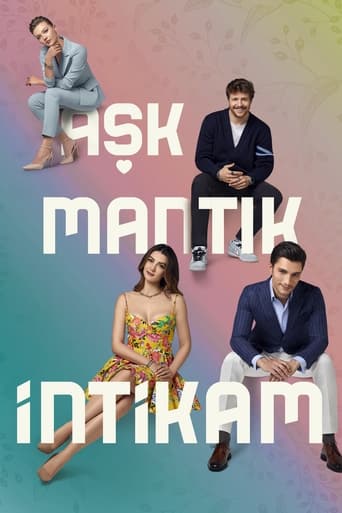
Can Yaman and Özge Gürel made two of the best-loved together. In Full Moon (2017) she is Nazlı, a student of gastronomy who takes a job as private cook to Ferit, a businessman who likes everything in its place; in Mr. Wrong (2020) he is a carefree restaurant owner who agrees to teach his neighbour how to win the man she thinks she wants. Love, Reason, Get Even (2021) begins after the wedding: Esra left her husband when his business failed, and years later finds herself working as a trainee in the company that has since made his fortune. Twist of Fate (2021) concerns a young woman convinced by family legend that she must marry her first love or be unhappy for ever.
There are many more. Everywhere I Go (2019) gives two stubborn people a claim to the same house. Afili Aşk (2019) marries a factory girl to a rich man's son after a piece of gossip. Love Once Again (2015) begins on an aeroplane, where a young mother and a man running from an engagement agree to tell their families that they are married. Accidental Love (2021), Recipe of Love (2021), Romance Next Door (2020), Love and Hate (2022), Erkek Severse (2022), If You Love (2023) and Possible Love (2026) continue the tradition, and Aynen Aynen (2019) retells it in short episodes from the first date onward, showing what each of the pair says and what each is thinking.
Grand romance
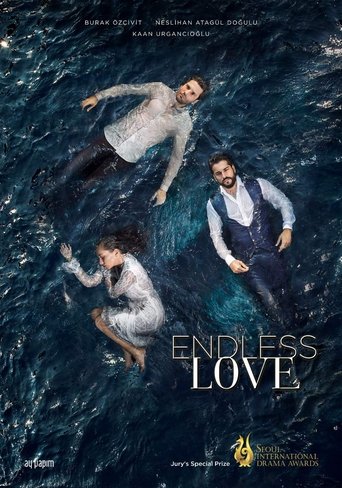
Beside the comedies stand the great romantic dramas, which run through the winter and are built on a larger scale. Endless Love (2015) is the best known. Kemal, the son of a barber, and Nihan, the daughter of a wealthy family, fall in love on a bus in Istanbul; circumstances part them, and five years later he returns as a successful engineer to find her married. Burak Özçivit and Neslihan Atagül play the pair, and in 2017 the series became the first from Turkey to win the international Emmy award for a telenovela. It has since been shown in more than a hundred countries.
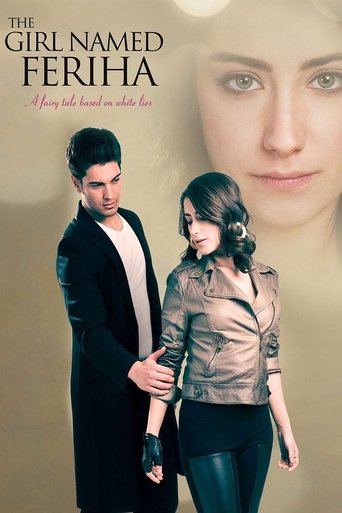
The Ambassador's Daughter (2019) is set on the Aegean coast, where Sancar, a man of the village, and Nare, the daughter of a diplomat, were parted on their wedding night and meet again years later; Engin Akyürek leads the cast. The Girl Named Feriha (2011) made stars of Hazal Kaya and Çağatay Ulusoy: Feriha is the daughter of a caretaker in a wealthy district of Istanbul, wins a scholarship to a private university and lets a fellow student believe she belongs to his world. Asla Vazgeçmem (2015) follows a young woman from the country who comes to work in a mansion on the Bosphorus, and Waiting for the Sun (2013) follows a schoolgirl from a small town to an exclusive college in the city.
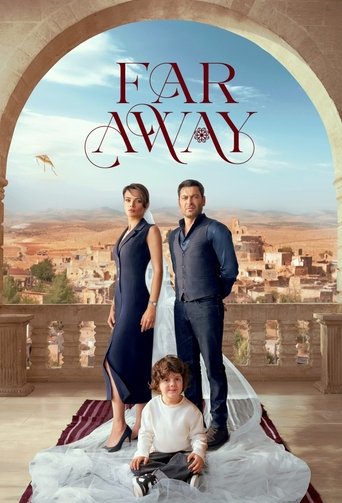
The newest successes show how the form keeps renewing itself. Yalı Çapkını (2022) begins when the grandfather of a wealthy Istanbul family decides that his careless grandson must marry a girl from Gaziantep, the home of the family; the young man chooses the younger of two sisters, and the series follows the marriage of Seyran and Ferit as two people who hardly know each other learn to be a couple. It has passed a hundred episodes and is among the most watched programmes in the country. Far Away (2024) takes a young widow and her small son to the old city of Mardin to bury her husband, where his powerful family expects her to stay.
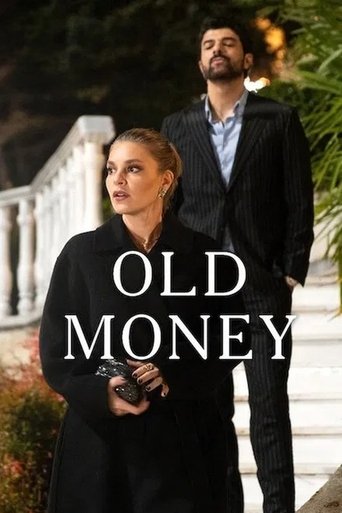
Others worth knowing are Wounded Heart (2021), set in Antakya, Hayat Şarkısı (2016), about two families bound by a promise made when their children were small, Siyah Kalp (2024), Sakla Beni (2023), Farewell Letter (2023), Tears of a Bride (2024), Land of Beautiful Love (2024) and To Love, To Lose (2026). Old Money (2025) and We'll Be Fine (2026) are shorter romances made for the streaming services, in eight episodes each.
Family dramas
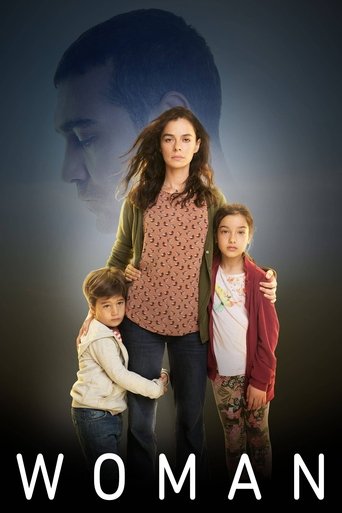
The family is the true subject of Turkish television, and ninety-seven series in the catalogue turn on one. Woman (2017) is the most admired. Bahar, played by Özge Özpirinçci, lost her husband in an accident and is bringing up a small daughter and son in a poor district of Istanbul, cleaning and sewing and counting every coin, when her own mother, who left her as a child, comes back into her life. The series, adapted from a Japanese original, ran for three seasons and eighty-one episodes, and its picture of the affection between a mother and two children has moved audiences in many countries. It is a serious drama, suitable for older children and adults.
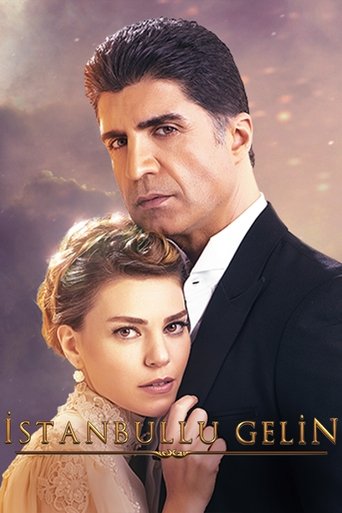
Bride of Istanbul (2017) is set in Bursa, where the Boran family have been leading citizens for generations. Faruk, the eldest of four brothers, falls in love with Süreyya, a violinist from Istanbul who grew up with an aunt, and brings her home to a mother who had other plans. The contest between bride and mother-in-law, each of them intelligent and each sure she is right, sustains eighty-seven episodes, and Aslı Enver, Özcan Deniz and İpek Bilgin are a pleasure to watch. New Bride (2017) plays the same situation for laughs, sending a young woman raised in Spain to live with a traditional household in the east.
My Home My Destiny (2019) follows Zeynep, born to a poor family and brought up from the age of seven by a wealthy one, as she tries to belong to both. Three Sisters (2022), from a novel by İclal Aydın, traces three daughters of a happy home in the seaside town of Ayvalık through very different marriages. Ruthless City (2019) brings a family from the provinces to work in a mansion in Istanbul, and Dirty Laundry (2023) looks at the women who keep the houses of a wealthy estate and at the families who employ them. My Better Half (2020), My Name is Melek (2019), A Little Sunshine (2022), Snowdrops (2025) and My Mother’s Tale (2024) are further stories of mothers and children.
Fathers have their series too. In My Sweet Lie (2019) a father who has been left to raise his daughter alone invents kind stories to protect her and has to live up to them. Baba (2022) is about the head of a large family in a provincial town whose fortunes change overnight, and The Name is Legend (2017) follows a former basketball star who becomes coach of a school team and a better parent in the process. Crossroads (2016), Kardeş Çocukları (2019), Darmaduman (2022) and Better Together (2019) each gather a household under one roof.
Hospitals, offices and newsrooms
Thirty-seven series are set in a workplace. The best known is Mucize Doktor (2019), adapted from a Korean original that has also been remade in America and Japan. Ali Vefa, played by Taner Ölmez, grew up in an orphanage, has autism and an extraordinary memory, and arrives at a private hospital in Istanbul as a trainee surgeon. Some of his colleagues doubt that he can do the job; his patients, especially the children, trust him at once. The series ran for sixty-four episodes and is among the highest rated in the catalogue.
Turkish television has adapted several other medical dramas. Hekimoğlu (2019) is the Turkish version of a famous American series about a brilliant and impossible diagnostician, with Timuçin Esen in the part. The Town Doctor (2022), also from a Korean format, follows a celebrated surgeon who leaves a great hospital for a small one in the provinces and trains two young doctors there. One Liter Tear (2018), from a Japanese original, is the story of a student who meets a serious illness with courage.
Other workplaces are livelier. As the Crow Flies (2022) is set in a television newsroom, where a young woman who has grown up on social media talks her way into a job beside the presenter she has always admired and begins to climb. Yeşilçam (2021) recreates the Turkish film industry of the 1960s, when hundreds of films a year were made in a few streets of Istanbul, through the eyes of a producer played by Çağatay Ulusoy. Acans (2021) is a comedy of an advertising agency, Evlilik Hakkında Her Şey (2021) follows a family firm of lawyers, and Kanunsuz Topraklar (2021) is a period drama set among the coal miners of Zonguldak in 1939.
Comedy
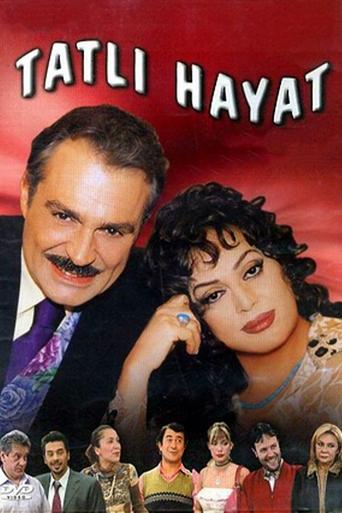
Turkish comedy has a long tradition of its own, older than the romantic comedies of the summer schedules. Sweet Life (2001) is one of its landmarks. It is a Turkish version of a classic American comedy about a family that has come into money: İhsan Yıldırım, played by the great Haluk Bilginer, has made a fortune in dry cleaning and moves his household to an expensive district, where the neighbours are less impressed than he hoped. Türkan Şoray, the best-loved actress in the history of Turkish cinema, plays his wife. The two had already appeared together in Second Spring (1998), which many viewers still name as the finest Turkish series of all: the slow courtship of Ali Haydar, who keeps a kebab restaurant in an old quarter of Istanbul, and Hanım, a widow with grown children, played by Şener Şen and Şoray.
Dadı (2001) was the Turkish version of a well-known American comedy about a saleswoman who becomes nanny to the three children of a wealthy widower, with the singer Gülben Ergen in the lead. Yarım Elma (2002), We Fell In Love With You (2002), Kampüsistan (2003) and Çılgın Bediş (1996), from a popular comic strip about a schoolgirl, belong to the same cheerful period. My Dear Family (2008) and Yalancı Romantik (2008) followed.
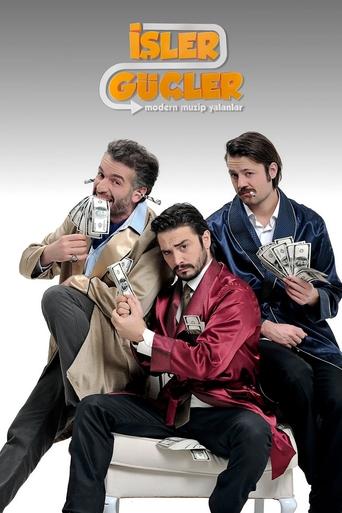
The writer and actress Gülse Birsel is responsible for two of the most popular comedies of the past fifteen years. Yalan Dünya (2012) sets two families side by side in an Istanbul street, one of actors and artists and one of solid citizens from the provinces, and lets them misunderstand each other for ninety episodes. Jet Sosyete (2018) moves a modest family into a gated estate of the newly rich. İşler Güçler (2012) is a comedy about three actors playing versions of themselves, and The Misfits (2020) is an absurd comedy of a neighbourhood where very little work is done.
Tolga Çevik has made a speciality of improvised comedy before a studio audience. In Komedi Dükkânı (2007) he walks onto a set knowing neither the story nor his part and has to find out both from the other actors as the scene goes on. Welcome, My Friend (2013) and What Did You Do, Boss? (2016) continue the idea. Dikkat Şahan Çıkabilir (2005) was the sketch programme that made the comedian Şahan Gökbakar famous.
The streaming services have brought a quieter kind of comedy in short seasons. Man on Pause (2022) stars Engin Günaydın as a man of fifty who decides to change his life and manages mostly to alarm his family. A Round of Applause (2024), by the writer and director Berkun Oya, follows one family across several decades with a dry and original humour. I am Bartu (2018) is a comedy about an actor's small fame, Visible Man (2017) is set in a world where everyone but the hero is invisible, and Dünya Bu (2023) tells thirty-two short stories in eight episodes.
Istanbul
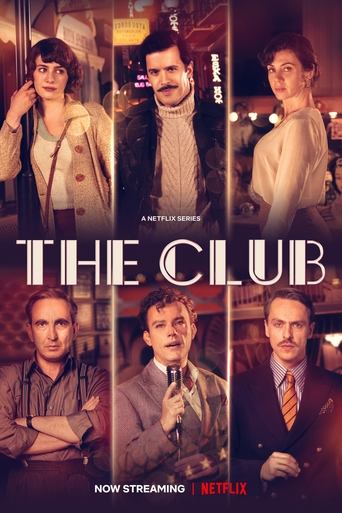
Istanbul is more than a setting in these series; it is a character, and the camera returns again and again to the ferries, the waterside mansions and the bridges over the Bosphorus. The Club (2021) recreates the city of the 1950s, when the district of Pera was home to Greek, Armenian and Jewish communities as well as Turkish ones. Matilda, released after many years away, takes work in the laundry of a fashionable music hall in order to be near the daughter she was unable to bring up. The series was praised for its care with history and for the performance of Gökçe Bahadır.
Gonulcelen (2010) retells the story of Pygmalion on the hills of the city: Hasret, a flower seller with a remarkable voice, is taken up by a music teacher from a wealthy family, played by Cansel Elçin, who wagers that he can make her a singer of classical music; Tuba Büyüküstün plays Hasret. Just Be Happy (2015) and Üsküdar'a Giderken (2011) are warm comedies of neighbourhood life, and Rich and Poor (2019) sets two very different houses on one street.
Anatolia and the coast
Many of the most popular series leave the city for the provinces, where families are larger and traditions stronger. The Mansion With Vines (2002) was the first great success of this kind. A young woman who has studied in New York marries the heir to an old family of Cappadocia and comes to live in the family mansion among the rock valleys; the series, with Özcan Deniz and Nurgül Yeşilçay, drew so many visitors to the region that the house became a museum. Lady's Farm (2009), from a novel by Orhan Kemal, is set on the cotton plain of Çukurova in the 1950s.
Güzel Köylü (2014) sends a young woman from Istanbul to a village in the Aegean hills and makes a comedy of her welcome. My Heart Stayed in the Aegean (2015), Sevdam Alabora (2015), Daylight (2023), set in the fishing town of Foça, and Torn Apart (2026), set in Bodrum, all use the coast. Magarsus (2023) follows a family of citrus growers near Adana, and Modern Tales Of The East (2023) brings two brothers back to their father's town.
Series from books
Turkish television often turns to the national literature, and several series in the catalogue come from much-loved novels. The most adapted of all is the story of Feride, written by Reşat Nuri Güntekin in 1922: an orphan educated at a French school in Istanbul, quick-tongued and high-spirited, who leaves the cousin she loves on the eve of their wedding and goes to teach in the villages of Anatolia. BGESTV has two versions, each listed under its own name: the celebrated seven-part series Çalıkuşu of 1986, with Aydan Şener, and Lovebird (2013), with Fahriye Evcen and Burak Özçivit. Güntekin also wrote the novel behind From the Lips to the Heart (2007).
Red Scarf (2011) moves a famous love story by the Kyrgyz writer Chinghiz Aitmatov, about a lorry driver and a village girl, to Turkey. Haziran Gecesi (2004) is a romance of the same decade, and My Home My Destiny, Three Sisters and Siyah Kalp show that the habit continues. Ibn-i Sina: The Young Genius (2023) is a historical series for younger viewers about the boyhood of the great physician and philosopher of the tenth century, known in the West as Avicenna.
Short series
For decades a Turkish series meant a commitment of a year or more. The arrival of the streaming services changed that, and forty-eight series on BGESTV are complete in thirteen episodes or fewer. Yakamoz S-245 (2022) is an adventure in seven parts: a marine biologist, played by Kıvanç Tatlıtuğ, is on a research dive when a catastrophe strikes the surface, and finds refuge with the crew of a submarine. It is the one series of its kind in the catalogue and suits teenagers and adults. Letters from the Past (2025) follows a young woman who finds a bundle of letters written by schoolchildren to their future selves and sets out to deliver them.
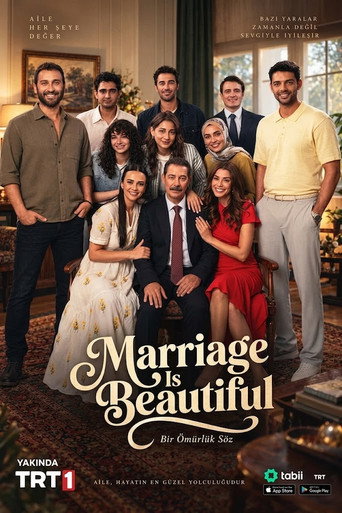
Among the shorter comedies and romances are Man on Pause, A Round of Applause, Old Money, We'll Be Fine, What Now? (2022), The Fate (2023), Esas Oglan (2024), Melody of Love (2023), Şanzelize Düğün Salonu (2023), Marriage Is Beautiful (2026), about a registrar who has married thousands of couples, and Perfect Groom (2016). Sevgili Geçmiş (2019) brings together three sisters who grew up apart, and Next Room (2024) is a family story in four episodes. Each of these can be finished in a week or two.
Seasons and episodes
Newcomers are often surprised by the length of a Turkish episode. On the national channels a single episode fills a whole evening and commonly runs for two hours or more, so that a season of thirty episodes contains as much story as three or four seasons of a series from another country. When the series are sold abroad, each episode is usually divided into two or three parts of about forty-five minutes. This is why Love Is in the Air has fifty-two episodes in the list on BGESTV and well over a hundred on some foreign services, and why the count on the service you use may differ from the count on the page.
The lists on BGESTV follow the original Turkish broadcast. Each series page shows the seasons in order and, within each, the episodes with their numbers and the dates on which they were first shown. The year under each poster is the year of the first episode. Series still in production are marked as returning, and their lists grow as new episodes are recorded by TMDB.
Most series tell one continuous story and should be watched in order from the first episode. The long family dramas, Bride of Istanbul, Woman and Yalı Çapkını among them, are divided into seasons that each end at a turning point, and many viewers pause between seasons. The comedies of the studio, Yalan Dünya, Jet Sosyete and Sweet Life, can be watched in any order.
Faces to follow
Turkish television has a recognisable company of leading actors, and following one of them from series to series is a good way to explore. Hande Erçel stars in Love Is in the Air and Aşk Laftan Anlamaz. Kerem Bürsin is her partner in the first and leads If You Love. Can Yaman appears in Full Moon, Mr. Wrong and İnadına Aşk, and Özge Gürel is beside him in the first two and leads Cherry Season. Burak Özçivit is in Endless Love and Lovebird. Demet Özdemir leads Çilek Kokusu and My Home My Destiny, and Burcu Özberk leads Afili Aşk and Love, Reason, Get Even.
Among the dramatic actors, Özge Özpirinçci is the heroine of Woman and of Love Once Again and appears in Yakamoz S-245. Engin Akyürek leads The Ambassador's Daughter and Old Money, and Aslı Enver is in Bride of Istanbul, Old Money and Just Be Happy. Özcan Deniz leads Bride of Istanbul and The Mansion With Vines, Tuba Büyüküstün is in Gonulcelen and The Ambassador's Daughter, and Çağatay Ulusoy is in The Girl Named Feriha and Yeşilçam. Afra Saraçoğlu, the Seyran of Yalı Çapkını, also appears in Yeşilçam, and Ozan Akbaba leads both Far Away and The Town Doctor.
Stories from other countries
Turkish producers are skilled adapters, and a good number of the series on BGESTV began life elsewhere. Korea has been the richest source. Mucize Doktor comes from a Korean hospital drama, The Town Doctor from another, and Love, Reason, Get Even from a Korean romantic comedy about a divorced couple. What Happens to My Family (2015) adapts a celebrated Korean family series in which a widowed father, tired of being taken for granted by his three grown children, takes them to court to teach them a lesson. Japan supplied the originals of Woman and One Liter Tear, and the United States those of Sweet Life, Dadı and Hekimoğlu.
What is striking is how completely each story becomes Turkish. Episodes are three times as long, so the writers add neighbours, cousins and grandparents, give the secondary characters love stories of their own, and move the action to recognisable streets and kitchens. A viewer who knows the original will find the adaptation a different and often warmer experience. The traffic now runs both ways: Woman, Endless Love, Love for Rent and Bride of Istanbul have all been sold for remaking in other countries, from Spain to Latin America.
School and youth
Series about the young have a firm place in the schedules. Waiting for the Sun (2013) follows Zeynep, who has grown up with her mother in a small town, to a private college in Istanbul where she is the newcomer among the children of the rich; it was one of the most popular youth dramas of its decade. The Girl Named Feriha tells a similar story at a university. My First Love (2018) is a comedy about the one girl in a group of five friends, Torn Apart (2026) follows a boy of seventeen who comes to Bodrum to look for the younger brother he lost in childhood, and Kampüsistan (2003) and Çılgın Bediş recall student life as an earlier generation saw it.
Several series about adults are really about starting out. Guardian Angels (2009) follows a young woman who moves to another city to try her luck, My Life (2021) a student of fashion design newly arrived in Istanbul, and Bir Deli Rüzgar (2018) is a story of fame, in which a singer famous in the 1980s meets a young woman with a voice. Love Makes Us Cry (2019) is about young people from the provinces who have come to the city alone and look after one another.
The table and the kitchen
Food is everywhere in Turkish television, and several series are built around it. In Full Moon the whole plot depends on a cook: Nazlı is studying Japanese cuisine and dreams of a restaurant of her own, and Ferit hires her because she is the first person to cook what he asked for. Recipe of Love (2021) sets a chef and a businessman at odds, Mr. Wrong takes place largely in a restaurant and bar, and To Love, To Lose turns on a family restaurant in danger of closing. In Second Spring the kebab house of Ali Haydar is as much a character as its owner, and the long table in the courtyard is where every quarrel is settled.
Even where food is beside the point, the breakfast scene is a fixture. A Turkish family series will gather its entire cast around a table laid with olives, cheese, tomatoes, eggs and glasses of tea at least once an episode, and a great deal of the plot is delivered there: announcements are made, guests arrive at the wrong moment, and someone always leaves before finishing. Viewers abroad often say that these scenes are what they remember best, and that they have sent them looking for a recipe.
Music
Every Turkish series has its own musical score, usually by a single composer, and the main themes are released as recordings and become popular in their own right. The melodies written for Endless Love and Bride of Istanbul are known to millions who could hum them at once. Music is also a subject. Süreyya in Bride of Istanbul is a violinist and singer, and her concerts mark the turning points of the story; Hasret in Gonulcelen sings both the songs of the street and the classical repertoire she is taught; and Melody of Love (2023) follows a young woman who comes to Istanbul to study and holds on to her father's dream of a life in music. Firat (1997) starred the singer İbrahim Tatlıses, one of the most famous voices in the country, in a drama of the south-east.
The company of characters
Part of the comfort of Turkish series is that certain figures return in story after story, a little different each time. There is the formidable mother of the hero, who runs a great house and receives her future daughter-in-law with perfect politeness and visible doubt; Esma in Bride of Istanbul is the finest example, and by the end of the series many viewers find that they have taken her side. There is the heroine's circle of friends, usually three, who share a flat or a street, appear at her door within minutes of any news and supply the comedy when the lovers are quarrelling; the friends of Eda in Love Is in the Air and of Defne in Love for Rent are as fondly remembered as the leads.
There is the loyal assistant or driver who knows more about the hero's heart than the hero does, the aunt who raised the heroine and reads her face at a glance, and the rival, elegant and well connected, who has known the hero since childhood and expected to marry him. There is the grandfather whose word is law, as in Yalı Çapkını, and the younger brother who brings trouble home. The writers know that the audience recognises every one of them, and the skill lies in giving each a history and a reason, so that even the schemers earn a measure of sympathy before the end.
Names and forms of address
A few words of Turkish make the subtitles easier to follow. People are addressed by first name with a title after it: Bey for a man and Hanım for a woman, so that the hero of Love Is in the Air is Serkan Bey to his staff. An older brother, or any respected man a little older than the speaker, is abi, and an older sister or friend is abla; a young man may call his manager abi and a neighbour's wife abla with equal ease. Teyze and amca, aunt and uncle, are used for older people in general. Canım, my dear, is said between friends of every age, and inşallah and maşallah are everyday expressions of hope and admiration.
Titles often keep a Turkish word because English lacks a tidy equivalent. A yalı is one of the wooden mansions on the shore of the Bosphorus, a konak is a large town house of the old kind, and a gelin is both a bride and a daughter-in-law, which is why so many titles contain the word. A dizi is simply a series, and the Turkish plural, diziler, is what admirers abroad have come to call the whole tradition.
How the series are made
The scale of production helps to explain the style. A series on a national channel is filmed week by week while it is on the air: the script for an episode of two hours or more is written, filmed and edited within about six days, and shown the following week. The cast and crew work long hours, the writers watch the ratings and the reaction of viewers after each broadcast, and a storyline that the audience loves can be extended while one that falls flat is quietly closed. A successful series may run for three or four seasons of thirty or more episodes each.
The same system means that some series end sooner than their makers hoped, after a dozen episodes or so, and BGESTV includes a number of these where the story is still complete and enjoyable; their pages show the count. The series made for streaming services follow the international pattern instead, with eight or ten shorter episodes written in advance, and they tend to be more compact in their storytelling and more varied in subject. Both kinds are filmed largely on location, in real houses, offices and streets, which is one reason the country itself is so vivid on screen.
A first month
A newcomer could spend a first month with BGESTV as follows. In the first week begin Love Is in the Air; three or four episodes will show whether the romantic comedy is to your taste, and most people find that it is. In the second week add a drama on alternate evenings, Woman or Mucize Doktor. In the third week watch a short series from start to finish, Man on Pause for comedy or Yakamoz S-245 for adventure. In the fourth, go back in time to Second Spring, which shows where so much of the present style comes from. By the end the collections of romance, family, work and comedy will each have a familiar landmark from which to explore.
Households with children can follow a different path. Ibn-i Sina: The Young Genius, Dadı, Sweet Life, Güzel Köylü, Çılgın Bediş and The Name is Legend are all suitable for viewers from about ten years old, and Mucize Doktor is a good series for a family to watch together. Viewers who are learning Turkish may like to begin with the studio comedies, whose speech is clear and whose situations explain themselves.
Watching with subtitles
Turkish series travel with subtitles or dubbing in dozens of languages, and the official services usually offer several. Subtitles are the better choice wherever they exist. Turkish is a musical language with long words built up from many parts, and after a few episodes its most common expressions become familiar: the greetings and thanks, the words for mother, father, aunt and elder brother that are used far beyond the family, and the exclamations that every character seems to share.
Titles are listed under their English release name where one exists and under the Turkish original otherwise, so that Mucize Doktor, Yalı Çapkını and Aşk Laftan Anlamaz keep their own names. The search recognises both forms, and typing Sen Çal Kapımı will find Love Is in the Air just as surely as typing the English title.
How the series were chosen
The catalogue began with a search of TMDB for series whose original language is Turkish. That search returned more than four hundred titles. Crime and mystery series, reality programmes, talk shows, documentaries and cartoons were set aside at once, and the remainder was read through by hand, story by story and poster by poster. Series about organised crime and armed conflict were removed, as were lives of religious figures, stories centred on cruelty and titles made for adult audiences, and 157 remained.
A few of the series kept are serious dramas best suited to teenagers and adults: Woman, The Club, Merhamet, The Choice and As the Crow Flies among them. The descriptions on their pages make the tone clear. Every title on BGESTV is unique to this guide among its sister sites. Scores, cast lists, episode lists and descriptions come from TMDB, and the Watch now links are provided by JustWatch, which records where each series is officially available country by country.
Using BGESTV
Search is the quickest route to a series whose name you know. Begin to type in the box at the right of the header and matches appear under it at once, each with its year. The Series page lists the whole catalogue with the most popular titles first, and the A-Z page sets all 157 in alphabetical order, one letter to a page. The column on the right of the home page lists series by name, as a programme guide would.
My List is the notebook for a viewer of long series. Add a title from its page and it stays on the list until you remove it, which is useful when a drama of eighty episodes has to share the week with two comedies. The list is saved inside your browser on the device you are using; BGESTV asks for neither a name nor an email address, and a button on the list page turns it into a file that can be opened on a second device.
The help pages explain each part of the site in a few lines. How to watch describes the path from a poster to an official service, Finding titles covers the search and the lists, My List explains the list, and Seasons and episodes explains the counts. There are short guides to romance, family series, comedy, drama, series about work, Istanbul, Anatolia and the coast, the classics, short series and long series, and a page that goes year by year.
Questions and answers
Questions
What is BGESTV?
BGESTV is a guide to 157 Turkish series, made between 1986 and 2026 and chosen for the whole household. Each series page gives the story, year, cast, seasons and episodes, and a Watch now button that leads to the official services carrying the series in your country.
Which series should I watch first?
Start with Love Is in the Air, Mucize Doktor or Second Spring. The first-month plan in the guide suggests an order for five series.
Is the catalogue suitable for families?
Yes. Every series was screened by hand, and the selection keeps to romantic comedies, family dramas, stories of working life and gentle classics. A few serious dramas are best for teenagers and adults, as the guide explains.
Why do episode counts differ between services?
A Turkish episode usually runs for two hours or more and is often divided into two or three parts abroad. BGESTV lists the original Turkish episodes.
Are the series subtitled?
Most official services offer subtitles in several languages, and many offer dubbing. The service page opened by Watch now lists the languages on offer.
Are there short series?
Yes. Forty-eight series are complete in thirteen episodes or fewer, among them Yakamoz S-245, Man on Pause and Old Money.
How does My List work?
Press Add to My List on any series page. The list is kept by your own browser, free of charge, and can be saved as a file.
Does BGESTV host episodes or downloads?
BGESTV is a guide only. Every Watch now button leads to an official, licensed service.